Building an AI-First Dating Product

- AI Product
- Consumer
- Social
- Messaging / Comms
- iOS/Android
- Product Strategy
- Experience Design
- Systems Design
- AI Design
I led a CEO-sponsored incubation team tasked to prove an AI-first dating product, removed profiles as a core constraint, introduced reflection into dating, and built a safety-first interview-to-introduction system that mitigated misuse, validated trust with real users, cleared legal review, and spun out as a standalone app.
Staff Product Designer
December 2025
12 Months
- Hinge CEO
- VP of Technology
- Director of Research
- OS Engineer
- Product Designer (Direct Report)
- Daters
Dating wears people down when they don’t see compatible matches, worry about ghosting or what to say, feel unsafe around bad actors, and have to put in constant effort just to participate.
Dating was built around a marketplace mindset of browsing and selling, not human understanding, limiting trust, safety, and teams’ ability to design for real compatibility.
Without a fundamentally new AI-first model, Hinge risked incremental gains while missing the chance to define a new category and long-term advantage.
The Finale
Standalone AI-first product
Repeatable trust and safety-first model
Category-level influence
This work resulted in a standalone AI-first dating product, a repeatable trust-first model, and category-level influence inside the company. It proved that insight and reflection could function as a core product primitive, reshaping how compatibility is formed and evaluated.
Legal approved the approach because safety constraints were designed into the system from the start, not retrofitted after launch, allowing trust, research, and legal to align on risk before scale.
Research validated trust, leadership committed, and the product spun out as a standalone app. The same day the spinout was announced, the company outlined plans to expand AI interviews, use quotes to improve profiles, and move beyond shallow prompts. The work did not just produce a product. It shifted the category.
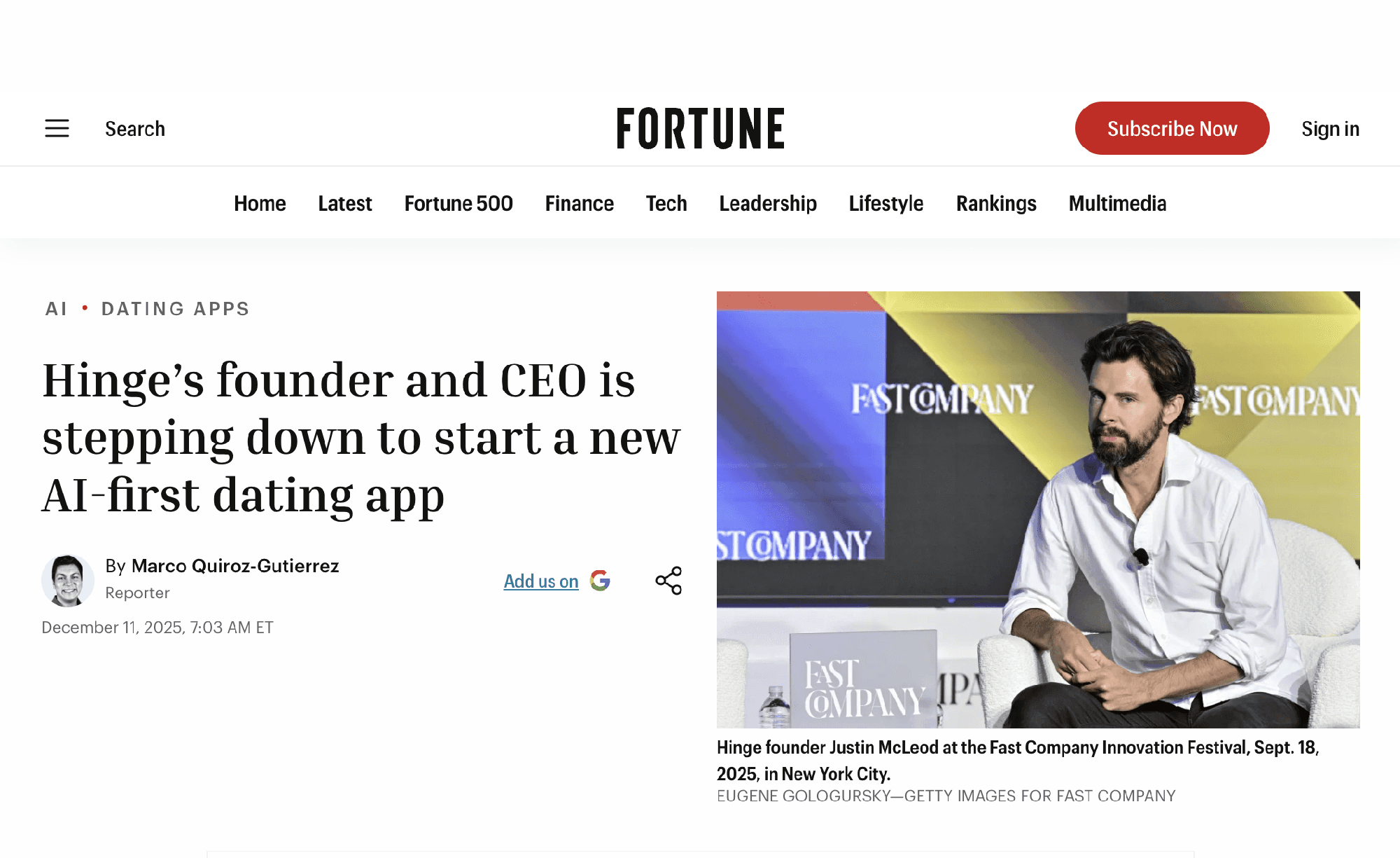
1 Year Earlier
Hinge Studios (CEO, VP of Eng, PD Lead, PD Direct Report, Director of Research, iOS Eng, AI PM)
New York, NY Hinge HQ, CEO’s Office
A new AI-first dating product
At the outset, Hinge had no product surface capable of turning conversation and reflection into durable insight. Through this work, I made AI trusted, shippable, and executable, which fundamentally changed the question from whether AI belonged in dating to what dating should become if AI were treated as a first-class medium.
That shift exposed a deeper structural problem. Profiles had turned dating into a marketplace, onboarding rewarded performance over honesty, and layering AI on top did not change the underlying model. The core app was too large to rethink these primitives quickly, making a ground-up AI-first dating product the only viable path.
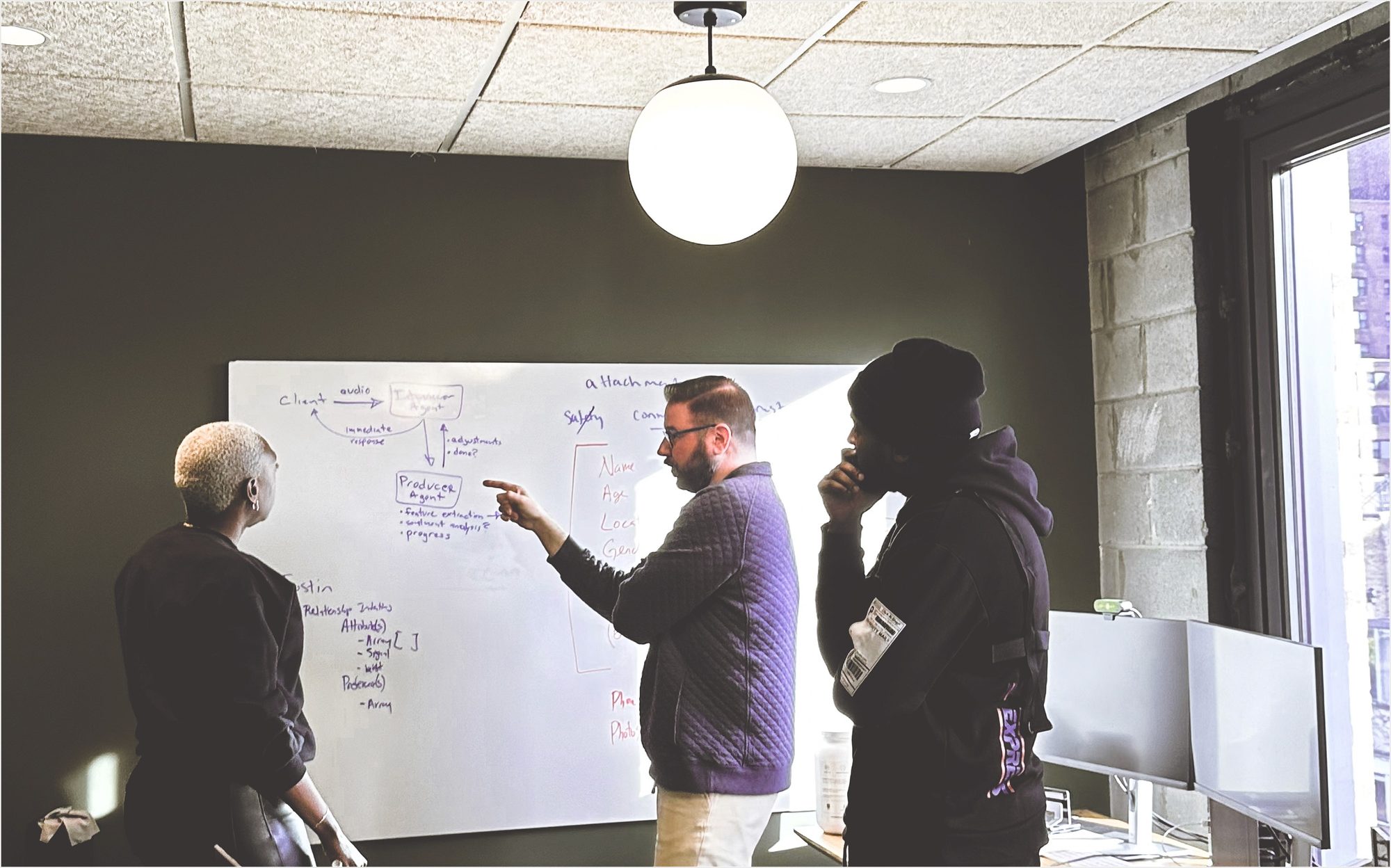
The Conflict
Representation before understanding
Legacy dating primitives
AI amplifying distortion
Legacy dating primitives forced people to perform through photos and prompts that flattened identity rather than revealing it. As AI was layered on top, these distortions were amplified, not corrected, because the system lacked any reflective surface to understand people beyond self-presentation. Removing profiles alone was insufficient without a fundamentally new insight model to replace them.
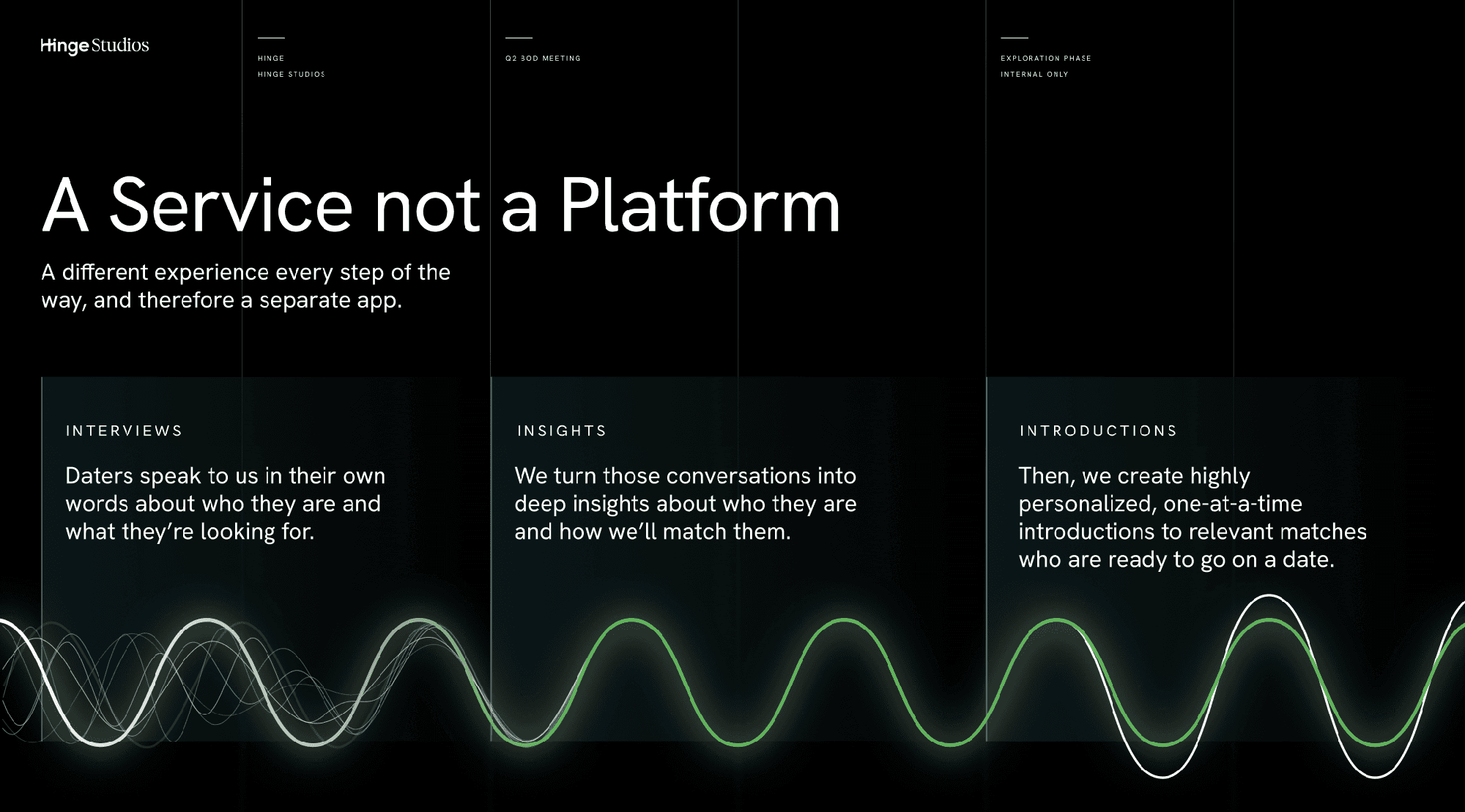
The Climax
Optimized for authenticity over agency
Interview → insights → introductions
Performance → alignment
I explored multiple interaction patterns and chose a guided AI interview because it reduced performance anxiety and let the system listen before speaking, while slowing people down to lower the risk of manipulation or misrepresentation.
I introduced insights and reflection as the core mechanism, designing quotes and user language as hypotheses the system could validate rather than synthesize, intentionally constraining AI so it could not invent or escalate narratives. This shifted AI from narrator to annotator, put trust and safety before introductions, and reframed its role from generating matches to mediating understanding.
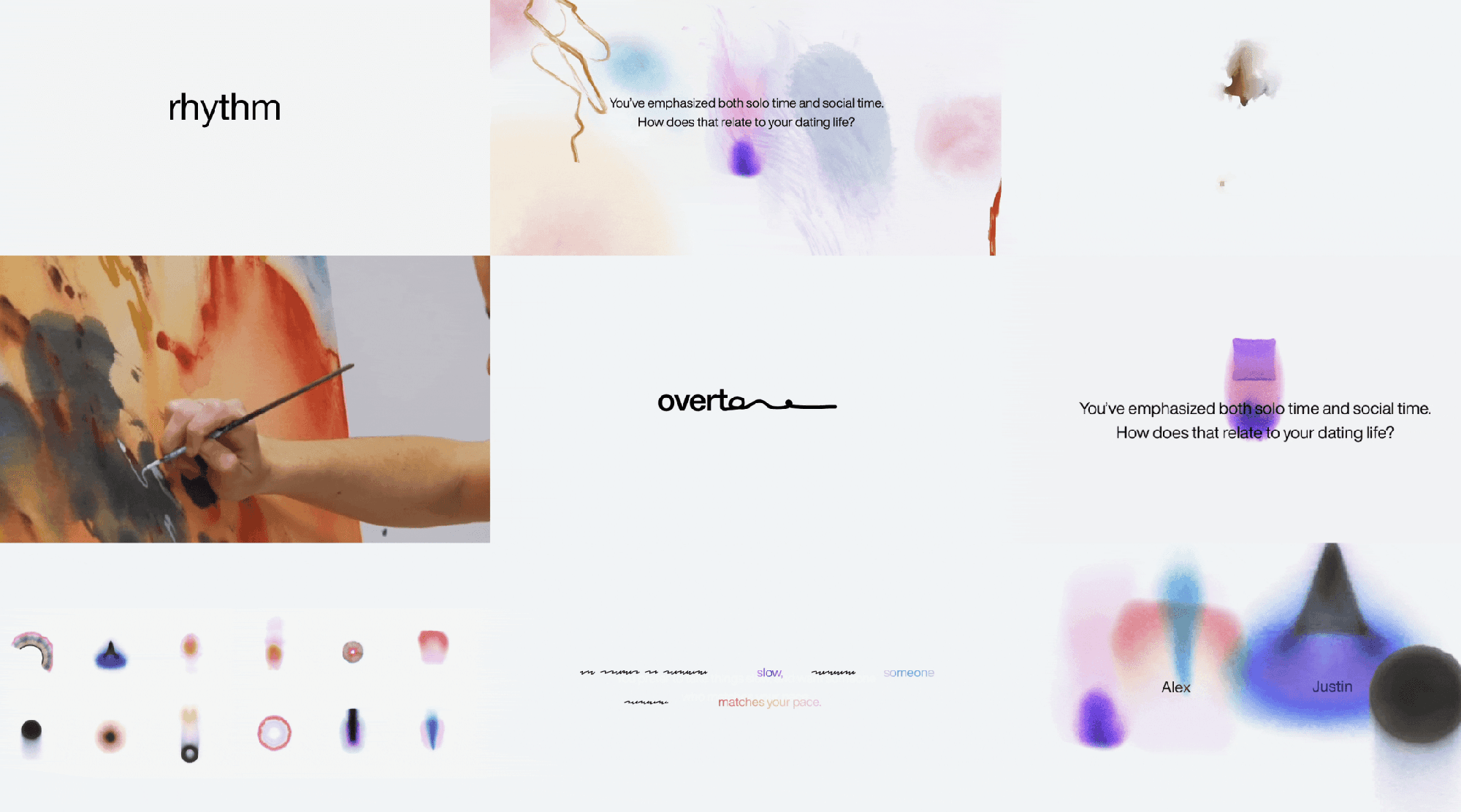
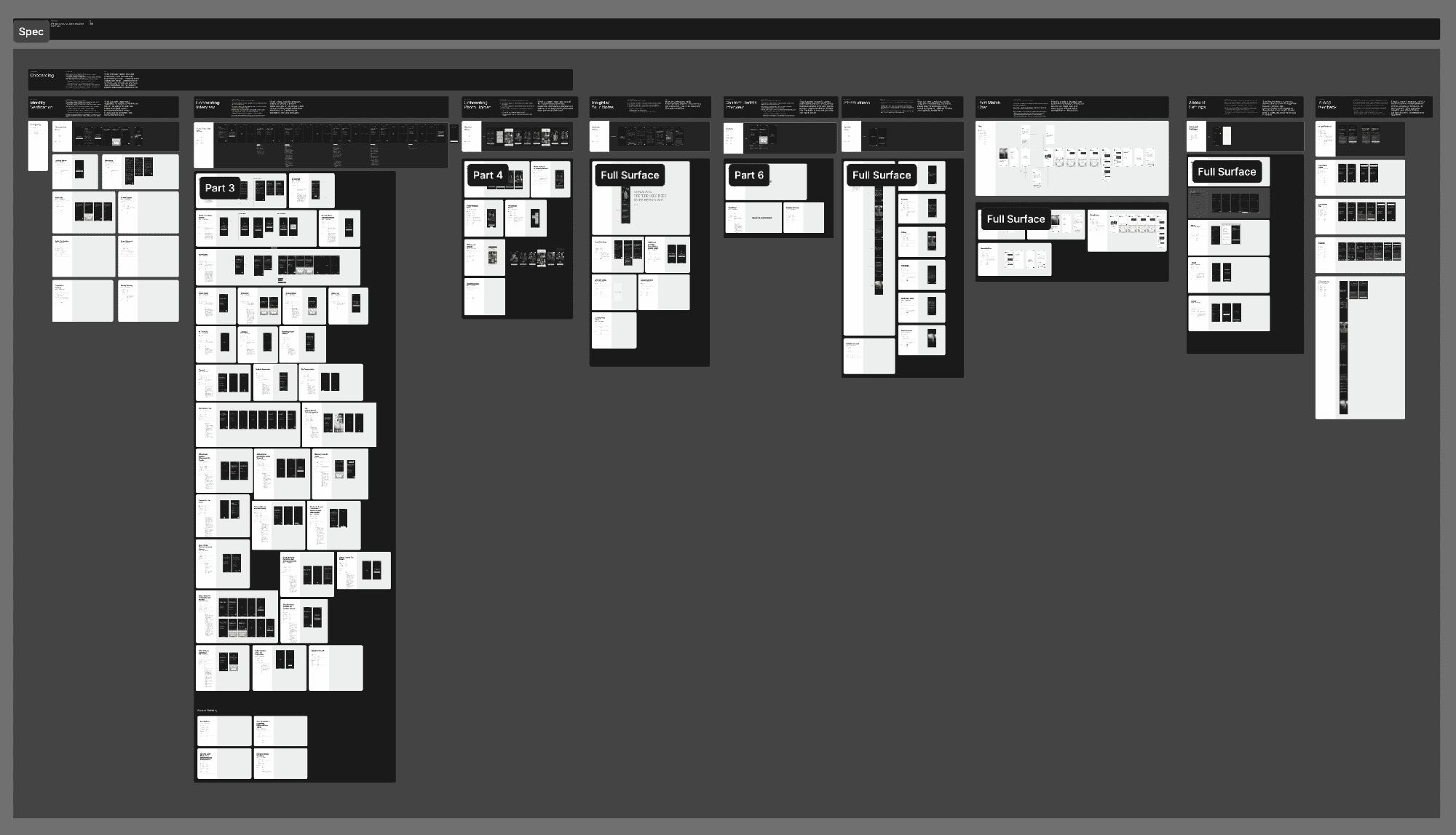
Details
0→1 Product Development
- Design Leaders
- Product Leaders
- Engineering Leaders
- Founders
- Companies building or betting on AI-first products
“An AI-first dating product built from understanding, not profiles.”
Est. $1.2–1.6M
Est. $15–20M