
Update of the day

Hinge · Dec 2023
Behind the design
Teams couldn’t agree on how to make AI decisions. I set a shared framework, so Hinge could move from debate to action.
 Craig RobertsLead Product Designer
Hinge Labs: a product design lead, a staff data engineer and a UX research lead
The Lifecycle team
Hinge’s research, design, product and engineering directors
When I joined Hinge, AI didn’t have an owner.
I was embedded on the Lifecycle team, creating strategy and shipping notifications and onboarding, while AI work lived loosely in Labs under a broad mandate to “investigate.” Leadership agreed AI mattered, but nothing was shipping.
Trust, safety, and authenticity came up constantly, but only in theory. The company wasn’t stuck because people disagreed. It was stuck because there was no shared way to decide what responsible AI in dating actually meant.
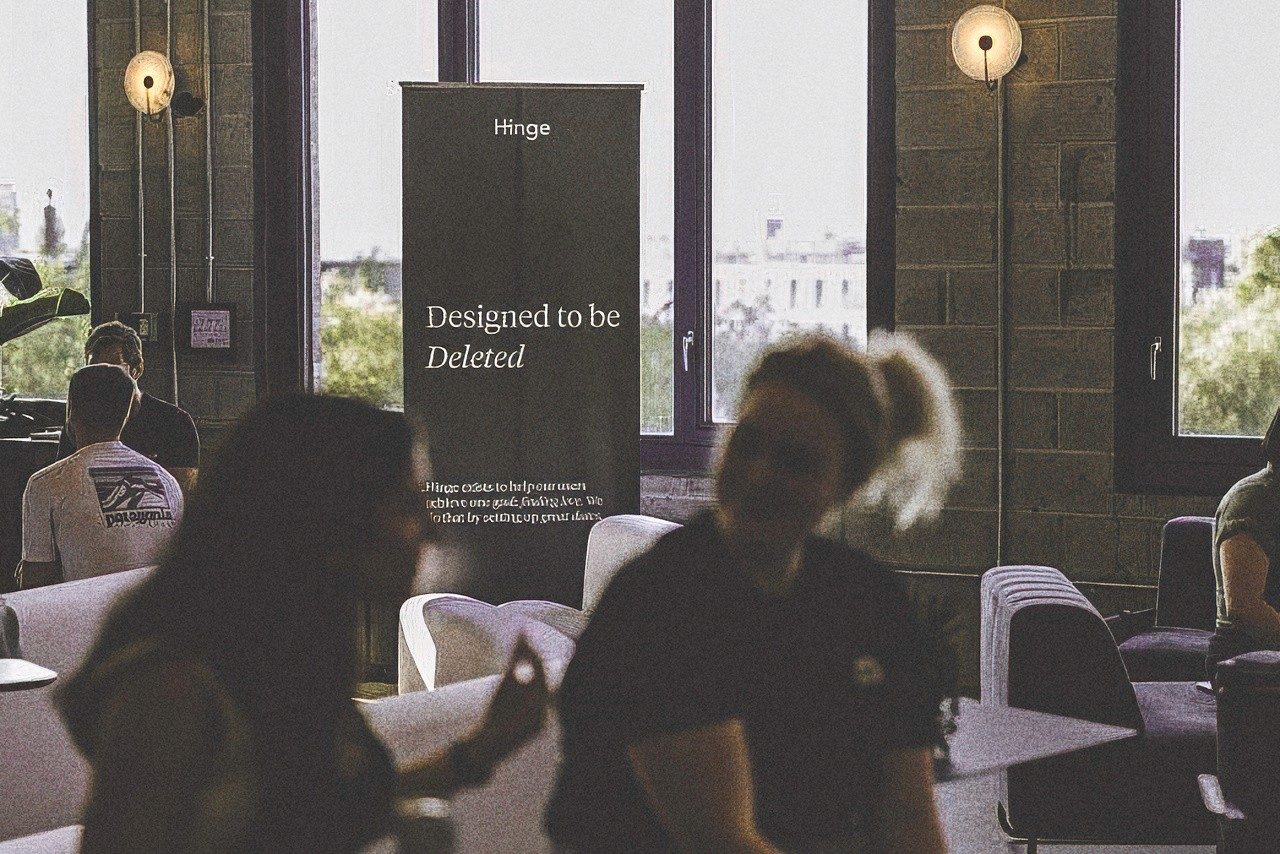
AI conversations lived in slides and meetings, not in experience or evidence. Teams couldn’t answer basic questions about what AI should solve, how autonomous it should be, or where it strengthened connection versus eroded trust. Leadership had already committed to doing AI while individual contributors were still debating whether they should, resetting every discussion to theory instead of conviction. Without shared criteria to decide, that gap widened, frustration grew, and alignment broke down as teams argued using incompatible frameworks.
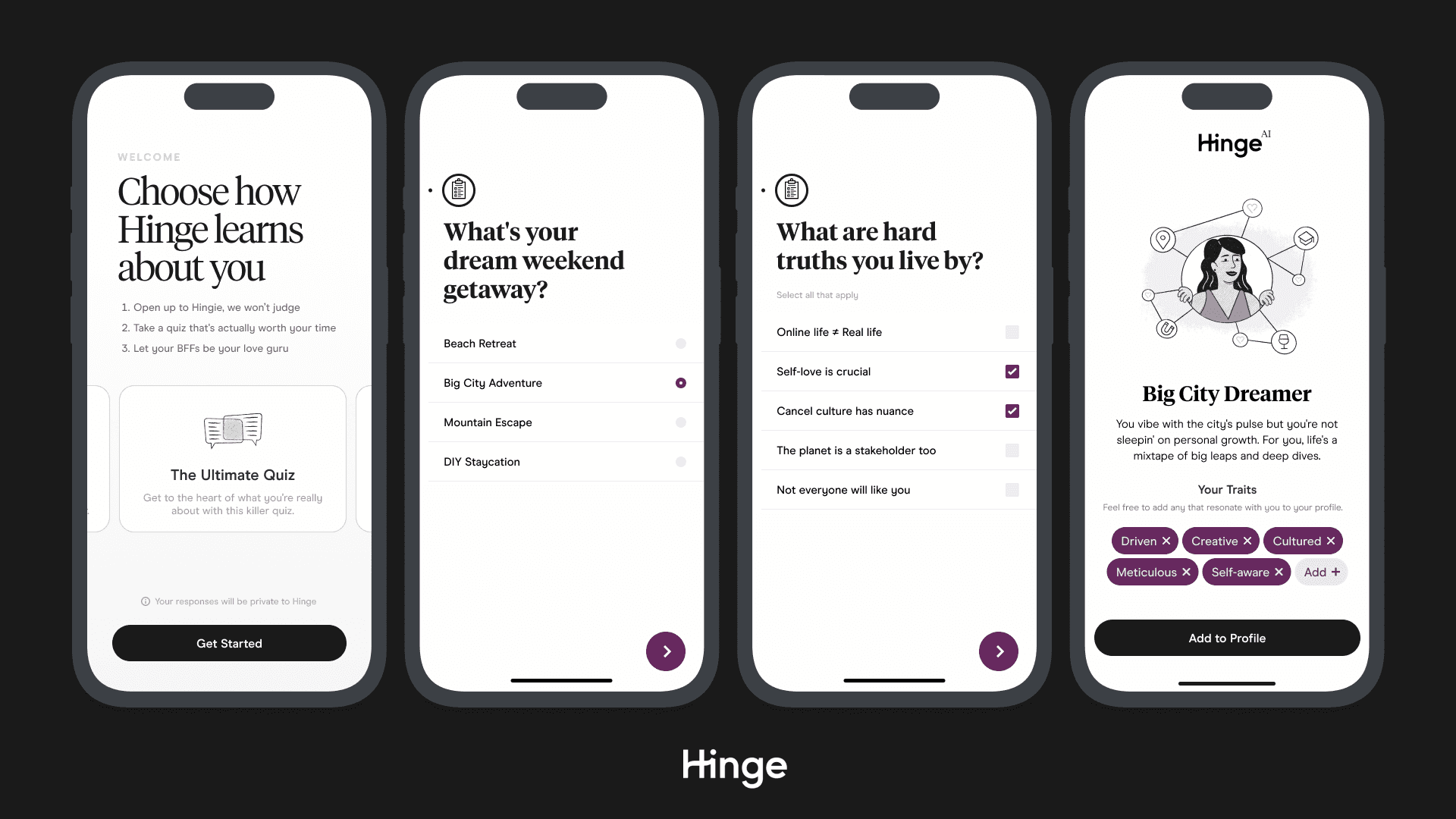
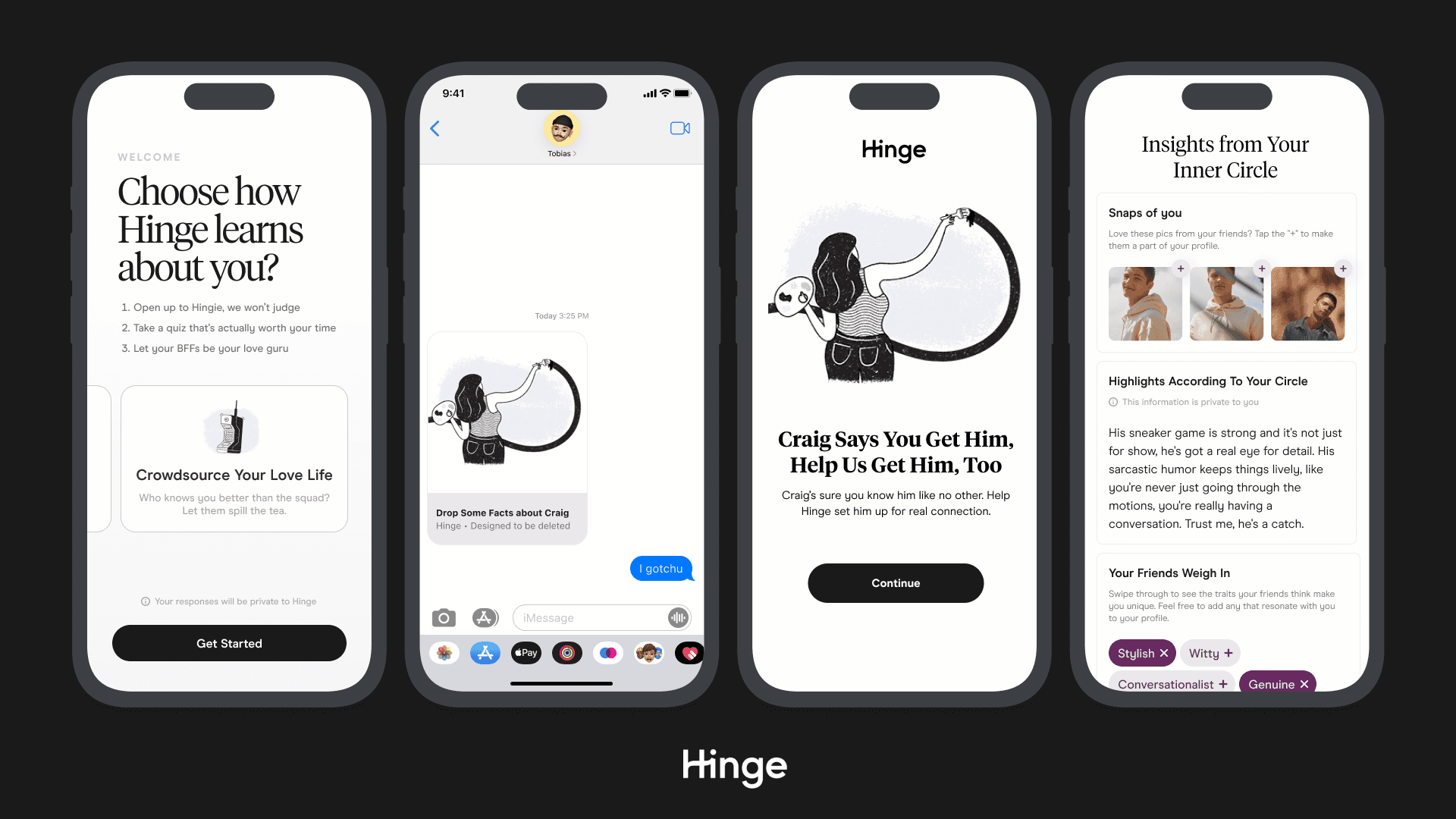
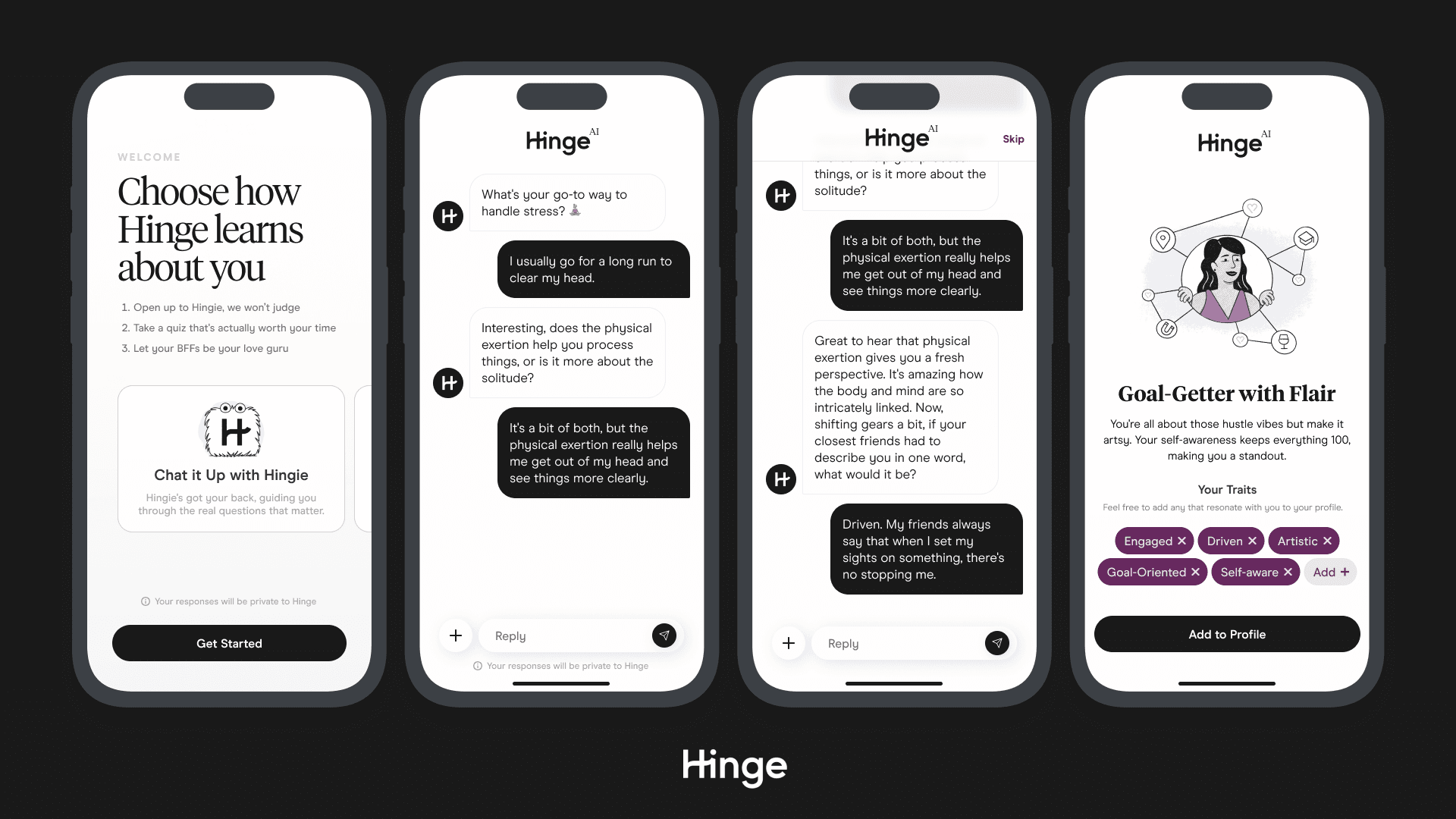
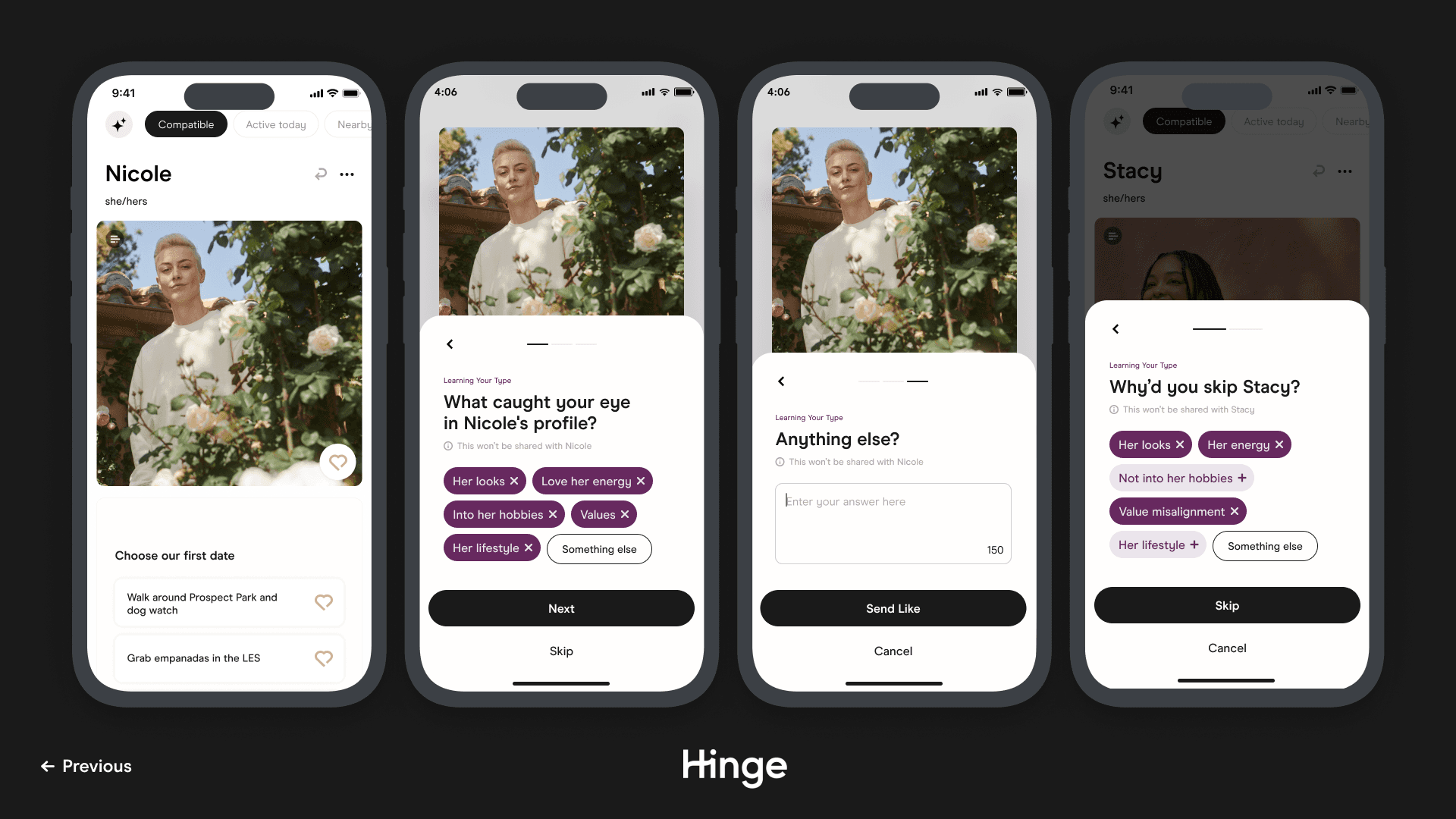
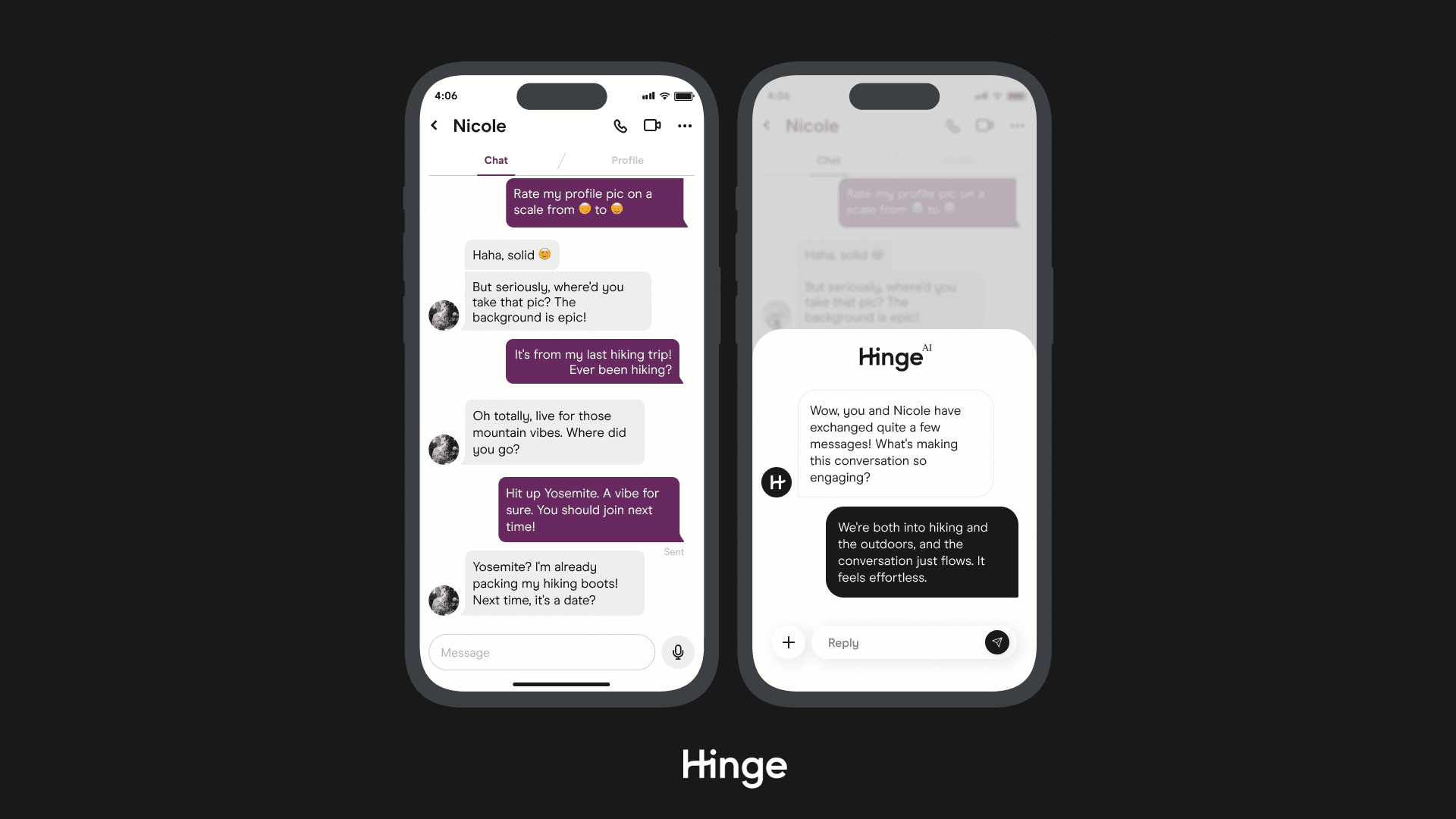
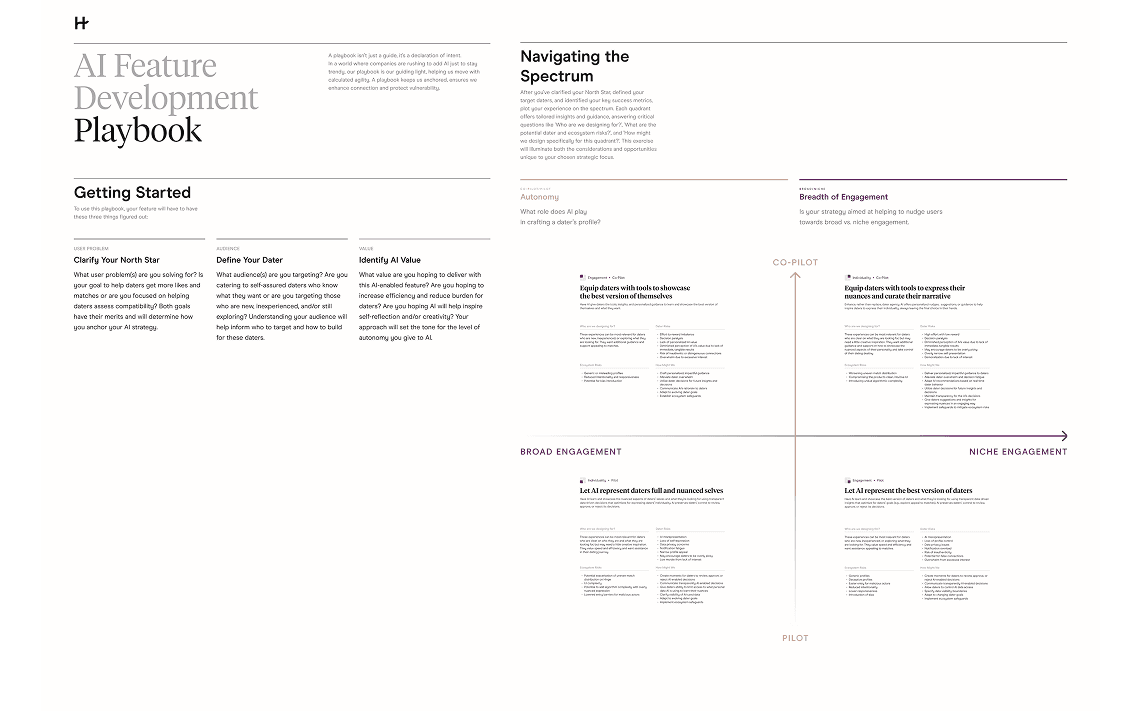
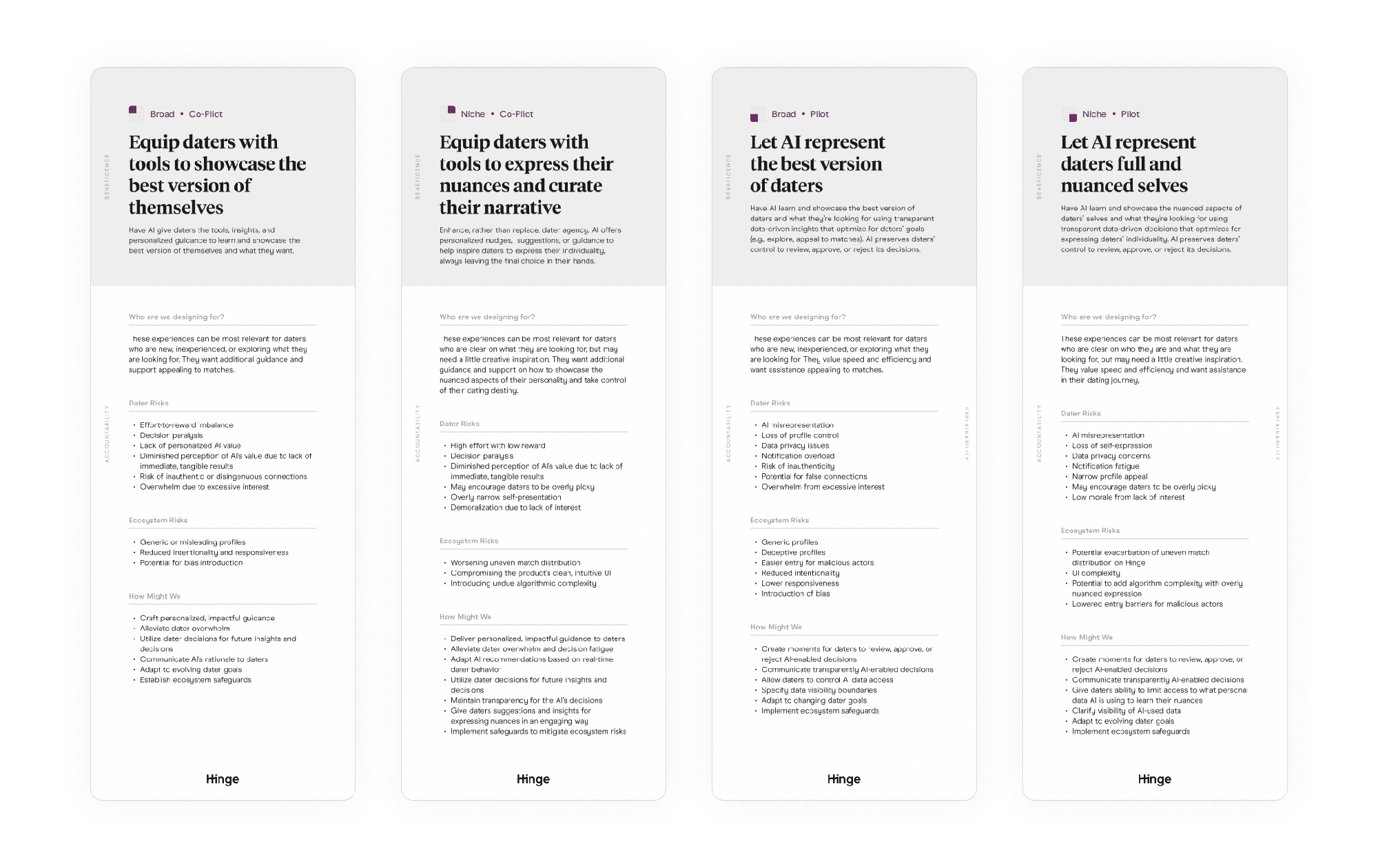
I defined the criteria leadership had to align on before any AI work could move forward. Alongside shipping on Lifecycle, I closed the broader organizational gap by making the product legible through the first company-wide end-to-end spec, giving teams a shared reference point across design, product, engineering, and research. I then created an AI feature development playbook that forced earlier decisions. Every initiative had to name the user, the problem, and the value. Spectrum-based models made tradeoffs explicit, requiring teams to decide how autonomous AI should be, how broad the audience was, and what risks and safeguards each choice carried, turning AI from abstraction into something the organization could reason about and build.
“The breakthrough wasn’t the feature. It was making the decision unavoidable.”
Before this work, AI reviews ended in debate. After it, they ended in decisions. While closing company-level AI uncertainty, I continued shipping on Lifecycle. This work delivered a +0.4% opt-in lift, up to +2% app-level opt-in for new-like notifications, and a +1.9% GDPU increase. The AI playbook grounded decisions in lived experience rather than opinion. It pulled Labs-tested concepts into executive planning across Hinge and Match Group and reshaped the AI Vision Sprint from whether AI should exist to how it should be applied. This phase did not ship an AI feature. It shipped the organization’s ability to decide, moving AI from ownerless belief to executable strategy.